Independent sourcing note: Coconut Bowls Supplier is an independent B2B sourcing desk — we are not a manufacturer, exporter of record, or freight forwarder. We curate verified Indonesian coconut-bowl makers (Bali & Java) and route your RFQ to a vetted production partner. MOQs, FOB prices, and lead times shown are indicative ranges [VERIFY by quote]. Food-contact compliance (e.g. FDA / LFGB) for US/EU import must be confirmed with the supplier and your own customs broker — this is general trade information, not legal, customs, or compliance advice. We may earn a sourcing commission on referred orders (referral disclosure).
A coconut bowl and spoon set wholesale order bundles the bowl itself with one or more companion pieces — a coconut-shell or coconut-wood spoon, a fork, a salad server, a bamboo straw, or some combination — into a single production and packing unit. That bundling changes nearly everything a buyer needs to plan: the MOQ calculation, the per-set price, the food-safety scope, the matching tolerance, and the packaging format. This guide works through each of those dimensions using supplier-reported market estimates, clearly labelled as such, so you can ask the right questions when a pro-forma invoice arrives.
We are an independent sourcing desk. We curate verified makers and route qualified RFQs to a vetted production partner — a referral relationship we disclose openly. We do not manufacture the goods, and we never fabricate supplier names or invent fixed prices. Every number on this page is either drawn from marketplace listings or stated explicitly as a market-typical estimate; confirm every figure by pro-forma invoice before committing to an order.
The Product Range: What Actually Ships as a Set
The word “set” covers a wide span in this category, and the components matter as much as the configuration count.
Spoon and Fork Materials
Cutlery that ships alongside coconut bowls typically comes in two material families, and they are not interchangeable in either sourcing or food-safety terms.
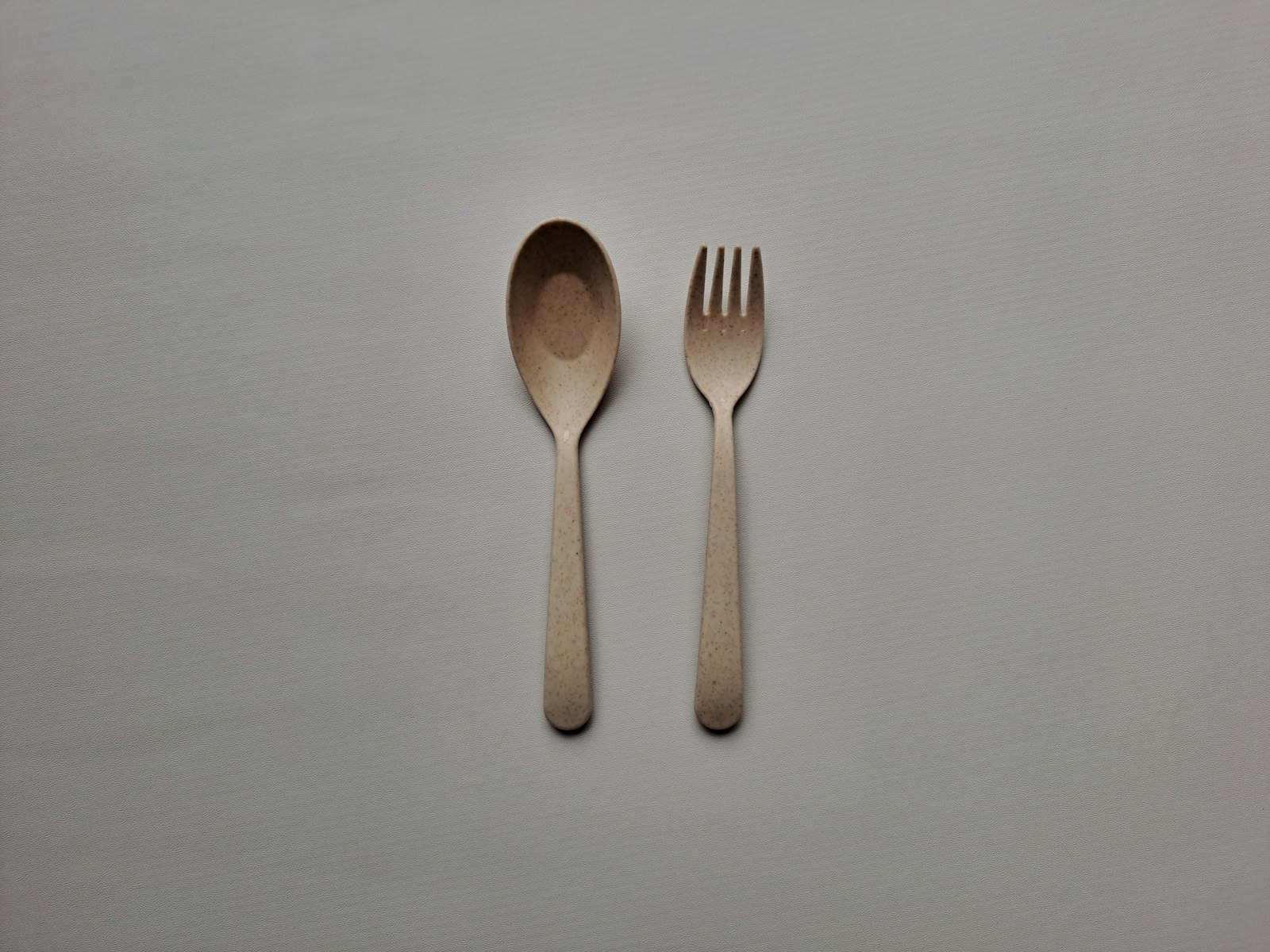
Coconut-shell spoons are carved from the same mature-brown-coconut shell as the bowl. The shell is dense and hard, which is why it takes a reasonable edge, but the bowl’s natural curvature limits spoon depth. Most coconut-shell spoons function well for smoothie bowls, acai, granola, and dense fruit — thinner soups are less well suited. Because the same shell-finishing principles apply, every food-contact surface must be sanded to at least 320-400 grit and finished with either a food-grade oil or a certified food-contact coating. A spoon that was oiled with generic hardware-store lacquer, or left with a rough sanding finish, carries the same compliance gap as a bowl with the same problem.
Coconut-wood spoons are turned or carved from the trunk or branch wood of the coconut palm (Cocos nucifera), a different material from the shell. The wood is lighter in color, typically straight-grained, and easier to carve into deeper spoon profiles and fork tines. It finishes well with food-grade mineral or coconut oil and can accept laser engraving cleanly. When buyers see “coconut wood” on a listing, they are looking at palm timber, not shell — worth confirming in the sample stage so the finished look matches expectations.
Bamboo straws are a common add-in for smoothie cafe bundles. They carry their own food-safety considerations: the inner bore must be clean and free of bamboo dust, the cut ends should be smooth, and any treatment or lacquer on the outside needs the same food-contact documentation as the bowl finish. Straws also add length to the carton, which affects packing density and per-unit freight cost.
Common Set Configurations
Suppliers typically offer four standard configurations, each aimed at a different end market.
| Configuration | Typical components | Primary market | Set price range (supplier-reported, FOB) [VERIFY] |
|---|---|---|---|
| 1 bowl + 1 spoon | 1 coconut bowl, 1 coconut-shell or coconut-wood spoon | Smoothie/acai cafes, basic retail | ~$1.50–2.50/set |
| 2-pc gift set | 1 bowl, 1 spoon, kraft sleeve or gift wrap | Gift shops, ecommerce bundles | ~$2.00–3.50/set |
| 4-pc set | 1 bowl, 1 spoon, 1 fork, 1 bamboo straw (or 2 bowls + 2 spoons) | Subscription boxes, mid-range retail | ~$3.00–4.50/set |
| 6-pc gift box | 2 bowls, 2 spoons, 1 fork, 1 straw in decorative gift box | Premium retail, branded gifting, D2C launches | ~$4.00–5.00/set and above |
All price ranges above are supplier-reported estimates drawn from marketplace listings. They are not fixed quotes and will vary based on shell size, finish, component materials, packaging format, branding, and order volume. Request a pro-forma invoice to confirm actuals for your specific spec.
Why Set MOQs Work Differently from Plain Bowl MOQs
This is where many first-time set buyers get caught. The MOQ for a plain bowl is typically quoted at 100–300 pcs, with some marketplace listings showing as low as 100 pcs and custom-finished lines running to 200–500 pcs. A set order does not simply inherit that same number.
Three mechanics push set MOQs upward — or sometimes in a surprising direction:
Component Matching
A bowl-and-spoon set requires that the maker produce and match components from two separate production lines. Bowls are sanded and finished in one batch; spoons are carved and finished in another. Getting the finish shade, oil sheen, and surface texture to look cohesive across both components takes extra effort at the quality-control stage. Most workshops will price that matching labor into a higher per-set cost or impose a higher set MOQ to spread the setup time. If you want a very specific color tone — say, a dark espresso-oiled shell that matches exactly between the bowl and the spoon — expect a more demanding MOQ conversation than you would have for a plain bulk bowl order.
Component-Level MOQs
Spoons as standalone items sometimes carry much lower MOQs than bowls — some marketplace listings show as few as 6 pcs for an accessory line. That can work in your favor if you already import bowls and simply want to add companion cutlery to an existing relationship. It can also mean the maker tracks bowl and spoon inventory separately, so a set order that runs out of one component but not the other creates a reorder headache. Ask your supplier explicitly how they manage component-level stock for sets.
Packaging and Gift-Box Setup
Moving from a polybag-in-master-carton export pack to a retail gift box adds a packaging-setup step. Custom gift boxes — branded, printed, die-cut to fit the bowl — typically require a print MOQ of their own (often 500–1,000 units minimum for a custom box, supplier-specific and unverified [VERIFY]). If your order quantity is below that threshold, you may need to choose between a generic kraft box, a plain white box with a custom sticker, or negotiating a shared print run with other orders in the workshop. Each option looks different on the shelf and carries different per-unit cost implications.
Pricing Logic for Sets: What Moves the Number
The set price is not just the sum of a bowl price plus a spoon price. Several factors shift the equation in ways that are easy to overlook in an initial quote request.
Shell Size and Component Depth
Mature coconut shells have a natural diameter range — most commercial bowls run roughly 12–14 cm across the rim, which is determined by the shell, not the buyer’s preference. Larger bowls from larger shells cost more per unit and also pack differently in a set box. If you are ordering a 6-pc set with two bowls, the packing dimensions become important: a box sized for two 12-cm bowls and four utensils will likely be bulkier than expected, reducing carton count per pallet and increasing your freight-per-set cost.
Finish Interaction Between Bowl and Spoon
A polished, lacquered bowl paired with an oil-only spoon will look mismatched in natural light. Buyers ordering sets need to specify the same finish approach for all components, which adds production steps if the maker typically finishes bowls and spoons separately. If both components require a certified food-contact coating (rather than a simple oil finish), the compliance cost and lead time apply to both items — budget accordingly. The food-safety considerations for spoons are identical to those for bowls: no coconut-shell-specific regulation exists in the US or EU, compliance is proven by composition plus migration testing against the relevant standard (US FDA 21 CFR, EU Regulation EC 1935/2004, Germany LFGB for buyers targeting German retail). Neither the “natural” label nor “BPA-free” on a spoon substitutes for actual test documentation.
Logo Engraving on Sets
Laser engraving is the most common branding method on shell products — it leaves a permanent, legible mark that does not interfere with the food-contact surface if applied to the exterior. Engraving on a spoon handle is straightforward on flat faces; engraving on the bowl of the spoon (the curved, concave food-contact area) is technically possible but creates care-instruction complications and is less common. For 4pc and 6pc coconut bowl spoon sets, buyers typically brand the bowl exterior and the spoon handle, leaving food-contact surfaces unbranded. Custom engraving almost always raises MOQ above the plain-stock level — confirm the OEM threshold for your specific configuration by separate quote, as it is supplier-specific and not auditable from marketplace data alone [VERIFY].
If you want a set linesheet with logo-engraving pricing for your volume, send us an enquiry or reach us directly on WhatsApp +62 811-3941-4563 — we route qualified set RFQs to vetted Indonesia-based producers.
Which Configurations Sell Where
Not all set formats perform equally across markets. Here is an honest breakdown of what we see buyers ordering for each channel — drawn from buyer briefs we receive and marketplace demand signals, not audited sales data.
Smoothie and Acai Cafes
Cafe operators overwhelmingly want a basic 2-piece — one bowl plus one spoon — that holds up to multiple service cycles per day. They are not looking for gift packaging; they want consistent finish, a reliable food-safe coating spec they can show a health inspector, and a reorder process that works without drama. The critical selection criterion here is the finish: oil-only bowls need re-oiling after a certain number of washes, which is impractical in a cafe setting. For high-turnover food-service use, a certified food-contact lacquer or film finish is functionally preferable — but the buyer must verify that the specific coating has been tested and cleared for food contact, not just marketed as “food-safe lacquer” (a marketing term, not a certification). Cafe buyers should also confirm that spoons are covered by the same food-contact test documentation as the bowls.
Price sensitivity in the cafe channel is high. Most operators targeting the ~$1.50–2.50/set range are looking at plain or lightly polished finishes without branded packaging, usually ordering 200–500 sets at a time to manage storage and cash flow. Volume buyers who can commit to a 20-ft container conversation unlock meaningfully lower per-set costs.
Retail Gift Shops
Gift retail buyers want a set that photographs well, ships in a box that can go straight on a shelf, and carries a hang tag or printed insert that tells the product story. The 4pc coconut bowl spoon set — or a 2-bowl-plus-2-spoon configuration — in a kraft gift box is a strong performer in this channel. Price points that work for gift retail typically land in the $3.00–4.50/set range FOB, which allows a 2.5–3x retail markup in markets like the US, UK, and Australia without the landed price becoming uncompetitive.
Gift buyers often want natural oil-finish products because the sustainability story is easier to tell on a hang tag: “finished with food-grade coconut oil, hand-washed only, each piece unique.” That story is accurate for an oil-finish bowl and actually simpler to document than a lacquer certification. The trade-off is durability and care-instruction complexity — gift retail buyers need to include care instructions that tell end consumers not to soak or put in the dishwasher, and not to use for very hot food or liquids.
Ecommerce Brands and Subscription Boxes
Ecommerce buyers, particularly those running branded DTC operations or curated subscription boxes, typically want a 4pc or 6pc coconut bowl spoon set with custom branded packaging and logo engraving on the bowl. They are building a product SKU, not sourcing commodity sets, so the OEM conversation is the starting point rather than a follow-up. Lead time matters more to this buyer type because a subscription box launch date is fixed — the set must arrive, pass any inbound QC, and be kitted before a hard deadline.
For ecommerce buyers shipping to Amazon FBA fulfillment centers, there is an additional layer: sets must be packed to Amazon’s carton and labeling specifications, and each unit typically needs a polybag and barcode label applied before delivery to the warehouse. Factor that prep cost — whether done at origin or at an FBA prep center — into the landed-cost calculation. Our packaging guide covers the retail-ready and FBA-prep packaging formats in more detail.
Food Safety on the Cutlery Components: What Is Different from the Bowl
Most buyers research food safety for the bowl and then assume the spoon is covered by the same logic. It usually is — but there are a few points specific to cutlery that are worth confirming separately.
Surface Area and Contact Frequency
A spoon makes direct, repeated contact with the food being consumed. Unlike the bowl, which the food sits in, the spoon goes into the mouth. That does not create a different regulatory framework — US FDA 21 CFR and EU Regulation EC 1935/2004 apply to both — but it does mean that any finish defects on the spoon (peeling lacquer, cracking oil coating, rough sanding) are more directly experienced by the end consumer. Spoon surfaces should reach the same minimum grit finish as bowls (food-contact surfaces at least 320–400 grit) and carry the same coating documentation.
Handle vs Bowl of the Spoon
The handle of a coconut-wood or shell spoon typically receives the same finish as the rest of the piece. If the handle is to be engraved with a logo or brand name, the engraving removes a shallow layer of material from that area — which on a coated piece can expose raw wood or shell at the engraving edges. This is generally fine on an exterior surface where the finish was not food-contact-rated anyway; it becomes a question to ask if the engraving is near the food-contact portion of the spoon. Standard practice is to engrave exterior-only areas and confirm with the maker that the food-contact surfaces are not compromised.
Bamboo Straws
Bamboo straws added to a set bundle are not shell or wood and are processed differently. The relevant concern for importers is the inner bore: bamboo dust, residual cutting oils, and any treatment applied to the exterior must not contaminate the interior channel. Bamboo straw food safety is its own assessment, separate from the shell bowl and spoon — ask for product-specific test documentation if you are marketing the bundle as food-safe or including the straw in the food-contact claim. Our food-safe finish guide explains the general certification framework that applies across all components.
Lead Times for Set Orders
Sets take longer than plain bowl orders, sometimes significantly. The supplier-practice ranges for standalone bowl orders run roughly 15–30 days for 100–2,000 pcs and 30–45 days (up to 60) for large or customized runs. Set orders add time at two specific points in that sequence.
First, component production runs in parallel but must finish at the same time for quality-matching and packing to work — if the bowls are done and the spoons are not, the order sits. Workshop scheduling for multiple component lines is less predictable than a single-SKU run. Second, gift-box assembly and any branded packaging add a packing step that plain bulk orders skip entirely. A realistic estimate for a branded 4pc or 6pc set order with custom engraving and gift-box packaging is 35–50 days production, before freight transit. For subscription boxes with a fixed launch date, build at least 10–14 days of buffer beyond the supplier’s quoted lead time [VERIFY with the specific maker before committing].
For a production and shipping schedule built around your specific set configuration, send us an enquiry or message us on WhatsApp +62 811-3941-4563. We factor in component sourcing, packing, and freight transit when estimating timelines for buyers.
Private-Label and OEM: Coconut Spoon OEM with Logo
Logo engraving on the spoon handle is the most common private-label request for set orders. The mechanics are the same as for bowl OEM: submit a vector file, the maker converts it to a laser-engraving path, and a sample is cut before full production. Engraving on a curved spoon handle requires slightly more setup than engraving on the relatively flat exterior base of a bowl — the jig needs to account for the curve, and the laser depth must be consistent across that curve to produce a clean mark.
For a full custom set — bowl with engraved logo, matching spoon with engraved logo, custom branded gift box with printed insert — expect a minimum sample-to-production cycle of 6–10 weeks total, including sample approval, not counting freight. Some makers offer a combined bowl-and-spoon OEM package at the same MOQ as a branded bowl order (200–500 pcs); others treat each component separately and apply individual MOQs. Get separate quotes for each component and for the set as a combined unit before deciding how to structure the order. Our private-label OEM guide covers the full branding-method spectrum and how to structure an OEM brief.
Linking the Set Decision to the Rest of Your Buy
A few cross-cutting considerations that regularly come up with set buyers:
- MOQ vs unit price trade-off
- A 200-set trial order at $3.00–3.50/set FOB tests the supplier relationship and gives you saleable stock, but the unit economics are thinner. A 1,000-set order unlocks better pricing but requires more capital and storage. Our MOQ and bulk guide walks through how to structure that conversation with a maker.
- Landed cost, not FOB cost
- A $2.50/set FOB price becomes a different number once you add ocean freight, import duty (HS classification for coconut-shell products is not straightforward — verify with your licensed customs broker), destination port charges, and inland delivery. Our export and Incoterms guide covers the mechanics of building a full landed-cost estimate.
- Samples before bulk
- On a handmade, natural-material product with multiple components, a sample is not optional. You need to confirm that the bowl-spoon finish match looks right in real light, that the spoon size and depth work for your intended use case, and that the overall set meets the quality tolerance you plan to specify in your contract. Our sample ordering guide explains the process and what to look for when evaluating a set sample.
- Wholesale pricing context
- If you want to understand how set pricing sits relative to plain bowl pricing across different finish and volume tiers, our wholesale pricing guide gives the full FOB cost picture with the same labelling conventions: supplier-reported ranges, not fixed quotes.
Frequently Asked Questions
What is the typical MOQ for a coconut bowl and spoon set wholesale order?
Most suppliers quote sets at a higher MOQ than plain bowls, typically in the 200–500 pcs range for a matched bowl-plus-spoon configuration with basic packaging. Plain-stock accessories like individual spoons can sometimes be ordered at lower quantities — some listings show as few as 6 pcs — but for a complete matched set, expect the component-matching and packing requirements to push the minimum higher. Custom branded sets with OEM engraving and custom gift-box packaging typically start at 300–500 sets or more. All figures are supplier-reported market-typical estimates; confirm your specific MOQ by pro-forma invoice [VERIFY].
Are coconut-wood spoons and coconut-shell spoons food safe for cafe use?
Both materials can be food safe when finished correctly, but the finish — not the material name — is what determines compliance. No coconut-shell or coconut-wood-specific regulation exists in the US or EU; safety is proven by composition plus passing migration tests under US FDA 21 CFR, EU Regulation EC 1935/2004, or Germany LFGB for more demanding markets. “Natural” and “BPA-free” are marketing terms, not certifications. For cafe use with multiple daily cycles, ask for actual test documentation covering the specific coating applied to the spoon’s food-contact surfaces, not just a general declaration. Hand-wash only; no dishwasher, no soaking, no hot liquids above comfortable-eating temperature.
What is the price difference between a 4pc and 6pc coconut bowl spoon set wholesale?
The gap is driven by component count, box size, and packing labor rather than any single fixed premium. A 4-pc set (one bowl, one spoon, one fork, one straw — or two bowls plus two spoons) typically runs in the $3.00–4.50/set range FOB; a 6-pc set in a decorative gift box tends toward $4.00–5.00/set and higher at lower volumes. Both ranges are supplier-reported estimates and will shift based on finish, shell size, packaging complexity, branding, and order quantity. Request a separate line on the pro-forma invoice for each configuration so you can compare the per-component economics directly [VERIFY].
Can I get coconut spoon OEM with my logo on a small test order?
Laser engraving setup on a spoon handle is relatively straightforward, but the economics of small runs work against the buyer. Most makers who offer OEM engraving need at least 200–300 pcs to justify the jig setup and artwork conversion cost. Some will offer a pre-production sample set — usually 5–10 pcs — at a sample fee, allowing you to approve the engraving quality before committing to a bulk run. That sample investment is worth making on a handmade curved surface, where logo depth and readability can vary from the artwork file. Our OEM guide covers how to structure an engraving brief and what to check on a sample.
Which is better for smoothie cafes: coconut-shell spoons or coconut-wood spoons?
For high-volume cafe service, coconut-wood spoons tend to be more practical. The palm-wood material allows deeper spoon profiles and longer handles than the shell alone, and the finish is typically more durable when correctly applied. Coconut-shell spoons have a distinctive aesthetic — naturally polished, dark, visually striking alongside a coconut bowl — which works well for lower-turnover cafe presentations and gift-retail sets. Neither material is dishwasher safe; both require hand-washing without soaking and periodic maintenance if finished with oil only. If you are running a smoothie cafe with 50+ covers per service and need spoons that hold up daily without care coaching for staff, confirm the finish type and food-contact test scope with the supplier before ordering.
Request a Set Linesheet
If you have a quantity, configuration, and market in mind, we can put together a curated set of verified makers matched to your spec and route a structured RFQ on your behalf. No one can pay to change what we publish here; if you use our help and proceed with a partner, they may pay us a referral fee at no extra cost to you.
Reach us on WhatsApp +62 811-3941-4563 or email [email protected] with your target configuration, quantity, destination, and any branding requirements. Or use our enquiry form for a structured brief. We respond within one business day, Indonesia time.